Back at the end of June, I visited the geographic center of New York City. It's a pleasant spot, under the elevated portion of the J. The summertime afternoon light filters down, and bounces off the brightly colored signs and storefronts that line the long run of Broadway. Right at the corner, there's a classic Fenced Lot.

If you need an excuse to see it for yourself, here's a good one: it's part of Neil Freeman's Centroids and Asphalt, created for the Elastic City series of walks. Freeman's work, often with GIS and graphics software, is generated from the difficult-to-see geographic, historic, and material data that compose the structures and streets of cities. The large scale patterns and forms that Freeman finds here are somehow comfortingly familiar and displacingly beautiful at the same time.

(All Streets, Centered, Chicago, by Neil Freeman)
Neil's walk integrates these same concerns: material flow, plant and animal life, social history, and organizational geometry - all in real world terms, all within a few blocks of central Brooklyn.
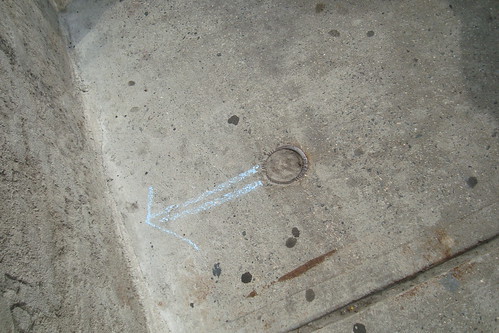
The best thing about this exploration is that it's conducted *with* the walk's participants, rather than *to* them. A session in front of a rowhouse, listing the inputs and outputs of one specific building, had us all speculating about the difference between a private monopoly and a public utility, privileges and rights, discrete deliveries and continuous flows ...
As Elastic City's founder, Todd Shalom, says in this interview with Neil and Urban Omnibus:
"Walking tours bore me– that’s what podcasts are for. In contrast to traditional walking tours, which seem to re-tell somebody’s or some group’s past experience through data and facts, Elastic City walks strive for a more embodied experience in the present moment. These walks offer to widen the perspectives for participants."
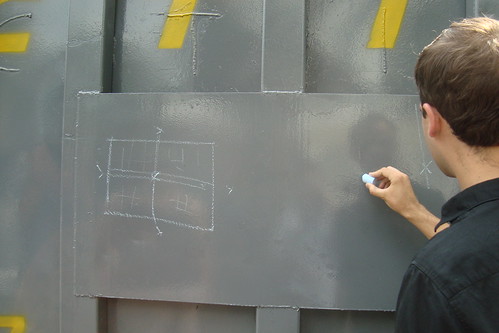
Neil's walk will be held a few more times throughout the end of the summer. There's one tomorrow.